September gives London photographers a particularly rewarding mix of warm evening light, lower summer crowds and the first hints of autumn colour. This guide is for visitors carrying a camera or phone who want better compositions—and for anyone keen to explore the capital with a professional eye.
Why September Works So Well for London Photography
The month sits between the brightness of summer and the richer tones of autumn. Early September often brings green parks and long enough evenings for relaxed golden-hour walks, while late September introduces amber leaves and a softer, moodier atmosphere.
Sunset shifts noticeably during the month, from roughly 7.35pm at the start of September to about 6.45pm by the end. Check the exact forecast before heading out, then arrive 45–60 minutes early to scout your viewpoint rather than rushing straight into the final light.
The quality of the light
Low September sunlight can skim across stone façades, create long shadows along bridges and add a warm edge to the Thames. Overcast days are useful too: cloud acts as a giant softbox, reducing harsh contrast around landmarks such as St Paul’s Cathedral and Westminster Abbey.
Best time to visit
For warm tones and reflections, aim for the hour before sunset. Sunrise is quieter and can be spectacular after rain, particularly around Westminster and the South Bank, but you will need to check opening times and transport availability.
London Photography Spots for Golden Hour
Westminster and the River Thames
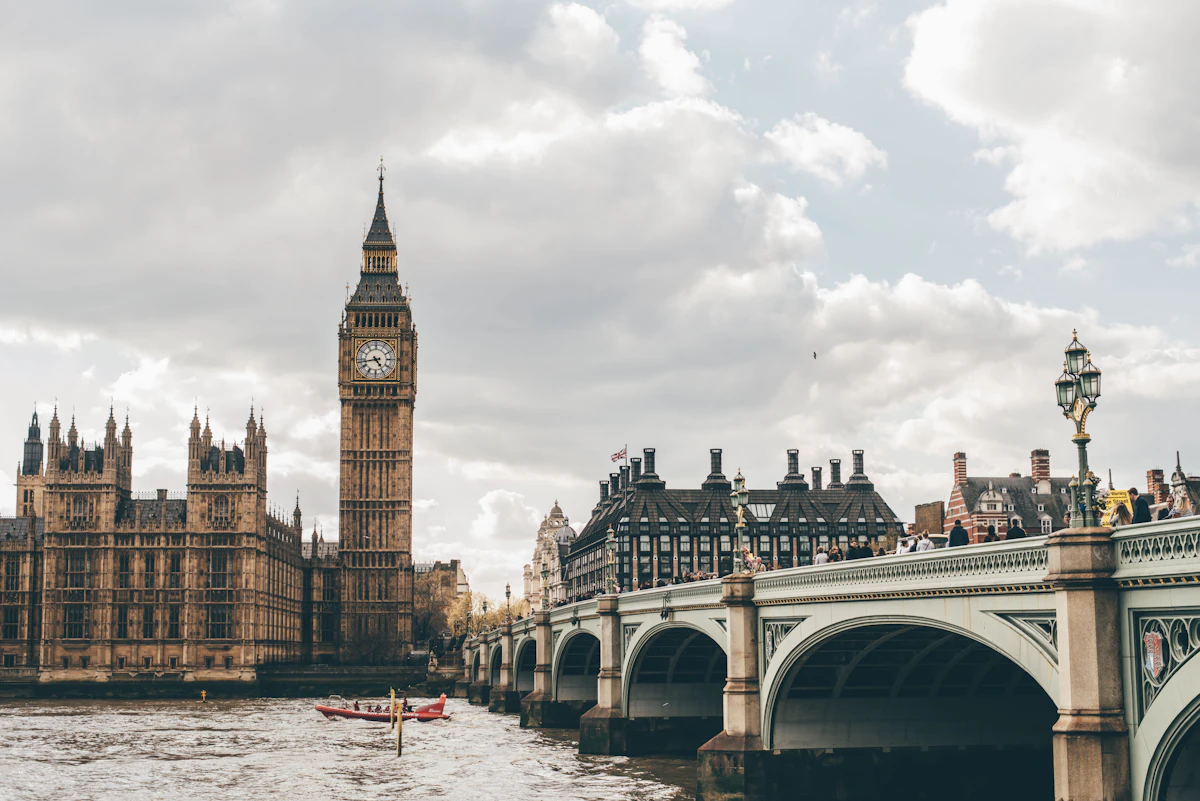
Begin near Westminster Bridge for a classic view of the Palace of Westminster and Elizabeth Tower. Shoot from the north bank for architectural detail, then cross towards the South Bank for wider compositions with the river in the foreground.
At low tide, the foreshore can reveal textured mud and reflections, but do not step down without checking the tide and access conditions. The Thames is dangerous, and the foreshore is not a place to explore casually.
St Paul’s Cathedral and Millennium Bridge
Millennium Bridge provides strong leading lines towards St Paul’s. Arrive before sunset to photograph pedestrians as small silhouettes, then move towards the cathedral for changing angles and illuminated stone.
A wide lens works well for the full architectural view, while a standard lens can isolate the dome between surrounding buildings. Keep an eye on passing cyclists and avoid blocking the bridge during busy periods.
Tower Bridge and the City skyline
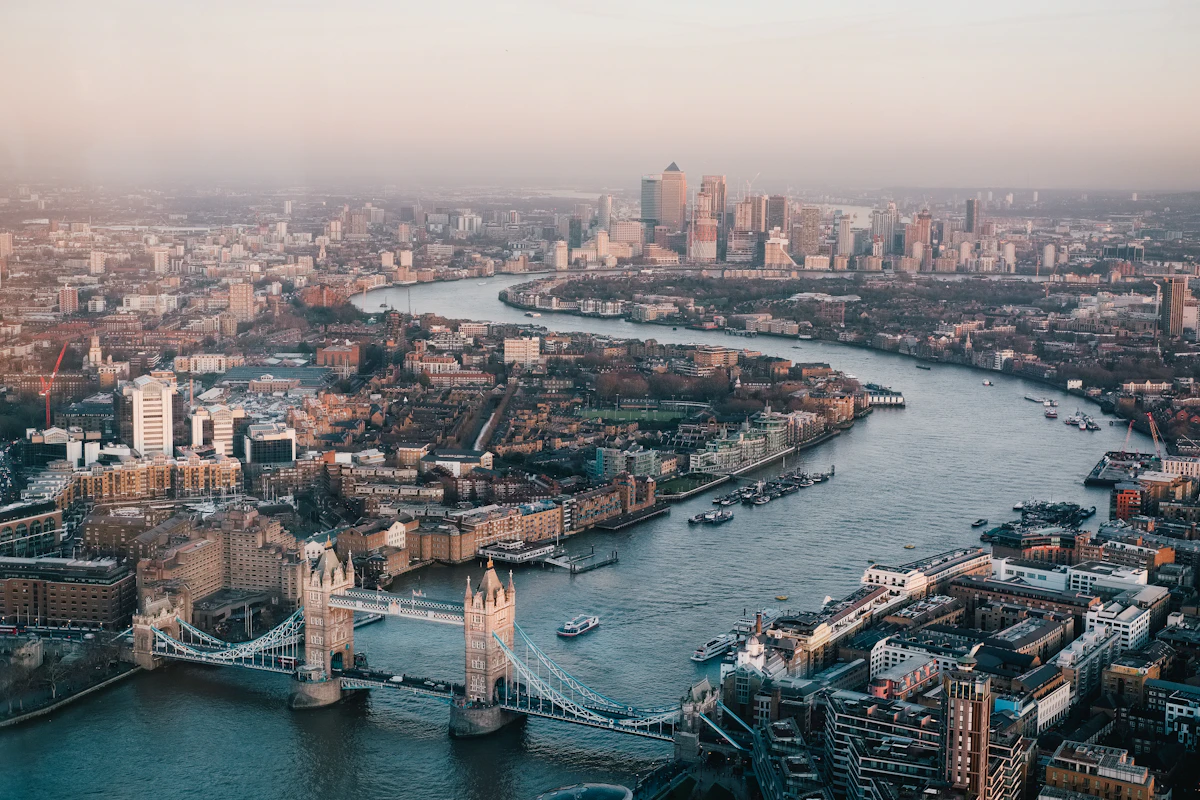
Tower Bridge is one of the most dependable London photography spots in changing weather. From the north bank, you can frame its towers with the river; from the south, the riverside walk offers layered views towards the City.
Blue hour—roughly 20–40 minutes after sunset—is especially effective here. The sky retains colour while the bridge and nearby buildings begin to glow, creating a balanced exposure that is less stark than photographing after full darkness.
Capturing Early Autumn Colour
September’s foliage is subtle rather than guaranteed, so look for individual trees and small details instead of expecting every park to be fully autumnal. Hyde Park, St James’s Park and Regent’s Park can provide useful foreground colour around formal views and lakes.
Use colour as a frame
Place golden or rusty leaves at the edge of the image to frame a landmark. A telephoto lens can compress layers of trees, paths and architecture, while a phone’s portrait mode can turn a single leaf into a foreground accent.
Photograph after rain
Wet pavements deepen colour and create reflections. Look for puddles near Trafalgar Square, South Bank walkways and Covent Garden, but protect your equipment with a small rain cover or waterproof pouch.
For natural-looking autumn tones, reduce saturation slightly rather than pushing orange and yellow too far. Shoot in RAW if possible, and underexpose bright skies by around one-third of a stop to preserve detail.
A Simple September Shooting Plan
A compact route can cover several landmark styles without crossing the city repeatedly:
- Start at Westminster Bridge about an hour before sunset.
- Walk along the South Bank towards Millennium Bridge.
- Photograph St Paul’s and the riverside as the light cools.
- Finish at Tower Bridge if sunset is late enough, or stay around the City for blue-hour views.
This itinerary is best suited to a clear evening and takes several hours at a relaxed pace. For a shorter session, choose either Westminster and the South Bank or St Paul’s and Tower Bridge rather than trying to do everything.
Best time to visit
For a quieter experience, photograph on a weekday and avoid Friday evening when riverside paths become busier. The first two weeks of September generally offer longer evenings; the final week is better if your priority is earlier sunsets and the first noticeable autumn tones.
Practical Camera and Composition Tips
Keep your kit light. A 24–70mm equivalent zoom, spare battery, lens cloth and a small tripod or beanbag cover most situations, while a phone with exposure control is perfectly capable in good light.
Use the grid on your camera or phone to keep horizons level, especially on the Thames. Reflections can make a strong foreground, but leave enough space above a landmark to show the sky’s colour rather than cropping tightly.
Working around crowds
London’s most recognisable viewpoints are public spaces, so patience matters more than expensive equipment. Wait for a gap, use moving people as scale and avoid setting up a tripod where it obstructs a pavement or access route.
Never photograph people closely in a way that feels intrusive. Ask permission for posed portraits, particularly when children are involved, and be considerate around commuters, performers and private residences.
Getting Around London for a Photo Walk
The Tube, Elizabeth line, buses and trains make it easy to connect the main viewpoints. Westminster, Waterloo, Blackfriars, London Bridge and Tower Hill stations are all useful for riverside routes, depending on your starting point.
Use an Oyster card or contactless payment, and check your bank’s overseas charges before tapping repeatedly. Contactless fares vary by zones and time, so consult Transport for London’s current fare information for the day of travel.
A walking route is often best for photography because it lets you stop for reflections, changing light and unexpected details. Wear comfortable shoes, allow extra time for crossings and keep your camera bag closed in crowded areas.
Budget and Safety Tips
You can photograph many of London’s finest exterior viewpoints without paying an entrance fee. Your main costs may be transport, food and optional attraction tickets; a café stop along the South Bank is an easy way to warm up after a damp evening.
Keep valuables secured in busy stations and on crowded bridges. Do not leave a camera unattended, and use a wrist strap or cross-body bag rather than placing equipment on the ground. Check weather and tide conditions before photographing beside the river.
If you are planning a wider sightseeing itinerary, compare options through PikaTour’s London tours. Travellers continuing their trip can also browse Istanbul tours and Bangkok tours.
Recommended PikaTour Experiences
For focused guidance, the London Photo Spots Tour lasts 3 hours and starts from £45. It is a practical choice if you want help finding strong viewpoints, improving compositions and making the most of London’s changing light without planning every stop yourself.
If you want broader sightseeing alongside your photography, consider the London Highlights Walking Tour, also 3 hours from £35. It offers a useful introduction to major landmarks and can help you understand the city’s layout before returning independently for a dedicated golden-hour session.
Availability and routes can vary, so check the tour pages before booking. Professional guidance is particularly helpful in September, when the best viewpoint may depend on cloud, sunset time and crowd levels.
FAQ
What is the best time for London photography in September?
The hour before sunset is usually best for warm light, followed by blue hour for illuminated buildings. Sunset is approximately 7.35pm at the start of September and 6.45pm by the end, so check the date-specific time.
Which London photography spots are free?
Westminster Bridge, the South Bank, Millennium Bridge, Tower Bridge’s surrounding riverside paths and many viewpoints in the Royal Parks can be photographed from public areas without an entrance fee.
Is a tripod allowed in London?
Small tripods are generally more practical than full-size models, but busy public areas may restrict equipment that obstructs pedestrians. Be courteous, keep walkways clear and follow instructions from staff or security.
Should I visit at sunrise or sunset?
Sunrise is quieter and offers cleaner viewpoints, while sunset is easier to fit into most itineraries and gives warmer activity along the river. Choose sunrise for solitude and sunset for atmosphere.
How can I find the best viewpoint without wasting time?
Scout your route in advance, check sunset and weather conditions, and allow at least 45 minutes before golden hour. A guided London Photo Spots Tour can also help you reach proven viewpoints efficiently.
Browse PikaTour’s London experiences to turn your September visit into a carefully planned photo walk, with local guidance, landmark context and more time behind the camera.