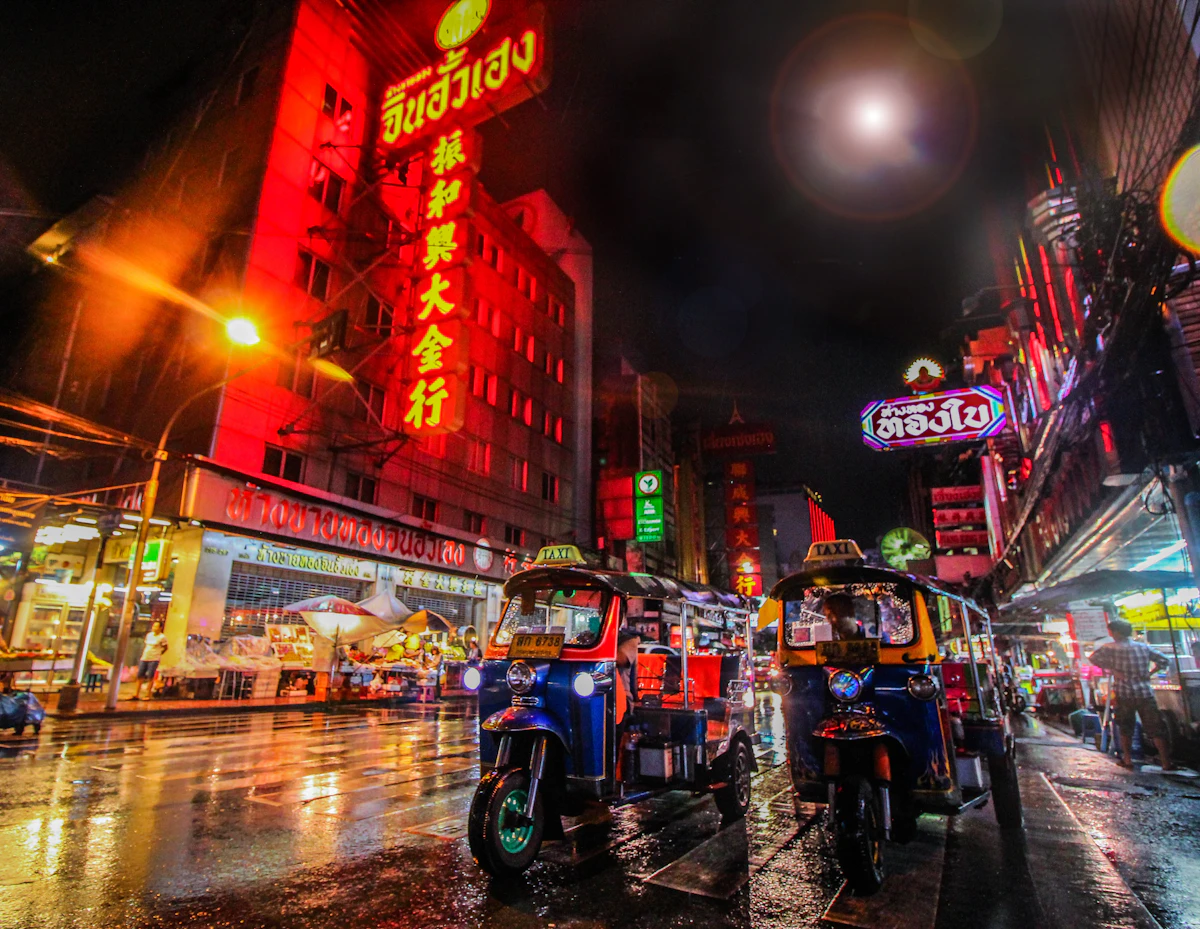
September showers can quickly turn Bangkok sightseeing into a wet and tiring experience. This guide is for travellers who want to enjoy the city’s culture without wasting time in traffic or standing in the rain.
With a little planning, indoor museums, covered temple spaces and air-conditioned transport make excellent Bangkok rainy day activities.
Understanding Bangkok’s September Monsoon
What to expect
September is typically one of Bangkok’s wettest months. Rain often arrives as a heavy afternoon or evening downpour rather than constant drizzle, although timing can vary from day to day.
Plan your main cultural visits for the morning, keep a flexible indoor itinerary, and allow extra time between stops. Streets may flood temporarily, traffic can slow sharply, and pavements become slippery.
Pack for sudden showers
Carry a compact umbrella, breathable clothing and footwear with good grip. A small waterproof pouch is useful for your phone, passport and travel documents, while a light layer helps when museums and shopping centres feel cool after the heat outside.
Indoor Temple Visits Without the Weather Stress
Start early at major temple areas
Bangkok’s most famous temples are not entirely indoors, but many include covered halls, cloisters and sheltered galleries where you can continue exploring during a shower. Arriving early gives you cooler temperatures, fewer visitors and a better chance of reaching key areas before the heaviest rain.
The riverside temple district is particularly rewarding in unsettled weather because several cultural landmarks can be connected with short transfers rather than long walks. Use covered walkways where available and keep your umbrella ready for open courtyards.
Dress and behave respectfully
Temples require modest clothing covering the shoulders and knees. Remove your shoes where signs request it, speak quietly and avoid taking photographs when photography is prohibited.
During rain, floors can become slick. Walk carefully, follow staff instructions and avoid blocking entrances while sheltering. An air-conditioned vehicle between sites is often more comfortable than waiting in a crowded roadside shelter.
Museum Tours for a Cooler Afternoon
Choose museums after lunch
Museums are among the most reliable Bangkok rainy day activities, particularly between 13:00 and 16:00, when showers are often at their strongest. They provide a cool, dry break while adding context to the city’s art, history and royal traditions.
The Bangkok National Museum is a strong choice for travellers interested in Thai sculpture, religious art and historical objects. Museum Siam offers a more interactive introduction to Thai identity and social history, making it a good option for families and first-time visitors.
Check opening days before travelling
Opening hours and last-entry times can change, so check the official venue information on the morning of your visit. Some museums close on Mondays, and smaller galleries may have shorter schedules than major institutions.
Allow at least two hours for a substantial museum visit. If the forecast shows repeated storms, choose one museum rather than trying to cross the city between several venues.
A Simple Rain-Proof Day Plan
Morning: temples and riverside culture
Begin with an early temple visit, ideally arriving around 08:30 or 09:00. The first part of the day is generally cooler, and you can explore outdoor courtyards before the rain becomes more likely.
Keep the late morning flexible. If the sky darkens, move into covered temple areas or travel directly to a museum rather than waiting for conditions to improve.
Afternoon: museums and café breaks
Use the afternoon for a museum tour, followed by a relaxed café stop. Bangkok’s shopping centres also provide dependable indoor facilities, including restaurants, toilets and cash machines, if you need to wait out a storm.
Evening: food under cover
For dinner, favour markets, food halls and restaurants with covered seating. Bangkok’s evening rain can be intense, so avoid planning a long open-air walk between several venues.
If you want a guided food experience, the Bangkok Night Food Tour lasts 4 hours and costs from £55. Ask about the meeting point and weather arrangements when booking, as conditions may affect walking sections.
Getting Around During Heavy Rain
Use air-conditioned transport strategically
Rain can turn a short journey into a slow one, particularly around central intersections and riverside roads. PikaTour’s air-conditioned transport options offer a practical way to move between cultural stops while staying dry and avoiding the discomfort of waiting beside busy roads.
For longer routes, combine guided transport with the BTS Skytrain or MRT. These systems are useful when roads are congested, though stations may still involve exposed pavements or stairs at street level.
Allow extra journey time
Add 30–60 minutes to journeys during a major downpour, especially during morning and evening peak periods. Ride-hailing vehicles can be convenient, but pickup points may be difficult to reach when kerbs and lanes are flooded.
Taxis should use the meter where available. Keep small notes for fares, and never enter a vehicle that feels unsafe or lacks clear identification.
Practical Costs and Rainy-Day Budgeting
Indoor cultural days can be reasonably affordable. Museum entry fees vary by venue, with many major attractions costing roughly £2–£8, while special exhibitions may cost more. Temple donations and entrance charges also vary, so carry some Thai baht in cash.
Set aside extra money for taxis, café stops and occasional last-minute changes. A guided experience may cost more than travelling independently, but it can simplify transport, timing and navigation when rain disrupts the city.
Best Time to Visit Bangkok’s Indoor Attractions
The best time for temple visits is usually 08:00–11:00, before the heat and heavier showers build. Museums are best placed in the early afternoon, especially on days when storms are forecast.
For September travel, check the weather forecast each morning but do not rely on it completely. Tropical showers can form quickly, so keep one or two indoor alternatives within easy reach of your planned route.
Local Safety and Etiquette Tips
Respect temple rules even when seeking shelter. Cover shoulders and knees, remove shoes when required, and ask before photographing worshippers or ceremonies.
Avoid walking through visibly deep water, as drains may be hidden and floodwater can be contaminated. Keep electronics protected, use hand sanitiser after travelling, and take care on polished museum floors.
If lightning is close, remain indoors until conditions ease. Do not stand beneath isolated trees or near riverside edges during a storm.
Recommended PikaTour Experiences
The Bangkok Temple & Riverside Tour is well suited to travellers who want a structured cultural morning. The experience lasts 5 hours and costs from £50, with temple and riverside sightseeing made easier by guided planning and PikaTour’s air-conditioned transport options.
It is a sensible choice during September because you can focus on the cultural highlights without having to work out every transfer in heavy rain. Confirm the itinerary and pickup details when booking, particularly if the forecast suggests severe weather.
For an evening that combines local flavours with guidance through Bangkok’s busy food scene, consider the Bangkok Night Food Tour. It lasts 4 hours and costs from £55; comfortable shoes and a small umbrella are still useful if the route includes outdoor sections.
You can also browse the full range of Bangkok tours, or compare ideas with London tours and Istanbul tours if Bangkok is one stop on a wider trip.
FAQ
Is September a bad time to visit Bangkok?
No. September is rainy, but showers are often intermittent, and the city has excellent museums, covered cultural spaces and indoor attractions. Build flexibility into your plans and use air-conditioned transport between stops.
What are the best Bangkok rainy day activities?
Museum visits, covered temple complexes, indoor exhibitions, cafés, food halls and guided tours are dependable options. Schedule temples in the morning and museums during the wetter afternoon period.
How should I dress for temple visits in the rain?
Wear clothing covering your shoulders and knees, and choose breathable fabrics that dry reasonably quickly. Bring footwear with good grip, as temple floors may become slippery.
Is public transport useful during heavy rain?
The BTS Skytrain and MRT can help avoid traffic, but stations may have exposed approaches and crowded entrances. For door-to-door convenience between cultural sites, consider an air-conditioned guided transfer.
Should I book a guided tour in September?
A guided tour can be especially useful in the monsoon season because it reduces navigation, timing and transport problems. Check the operator’s weather policy and meeting instructions before departure.
For a smoother cultural day, browse PikaTour’s Bangkok tours and choose an experience that combines expert guidance with practical, comfortable transport.